





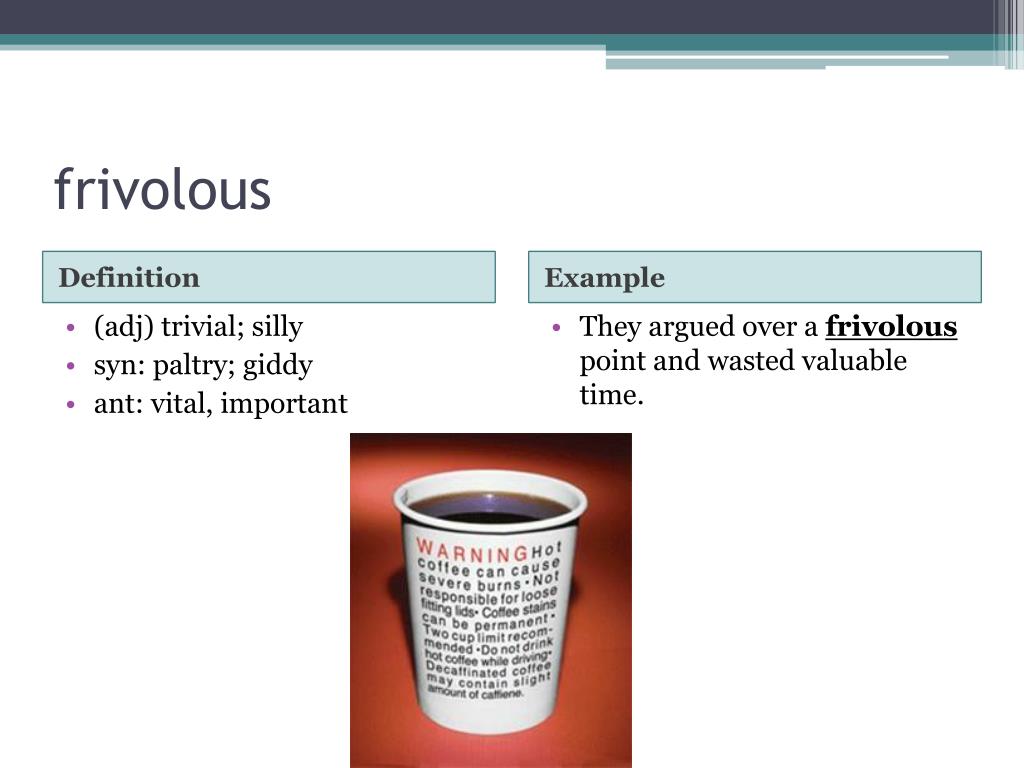











Ever scratched your head wondering what exactly it means for something to be labeled "frivolous"? It's a word that pops up in conversations, legal documents, and even our own internal monologues, often carrying a subtle judgment. At its core, "frivolous" describes something lacking serious purpose, value, or importance, suggesting it's trivial, superficial, or unnecessary.
Understanding what do frivolous mean isn't just about dictionary definitions; it's about context. What might seem frivolous in one situation – like buying a diamond-studded collar for a pet – could be a profound expression of love for another. Yet, in areas like the courtroom, the term carries precise and significant consequences, underscoring the need for a clear grasp of its implications.
| Aspect | Explanation | Example |
|---|---|---|
| Definition Core | Lacking in seriousness, importance, or value; trivial. | A person making a joke during a serious meeting. |
| Common Usage | Applied to actions, expenses, or attitudes perceived as unnecessary. | Splurging on a luxury item when basic needs are unmet. |
| Legal Context | A claim or lawsuit without legal merit or purpose, often filed to harass. | Suing someone over a minor perceived slight with no actual damages. |
What is the core meaning of being frivolous?
Being frivolous means something is lacking in seriousness or importance, often characterized by a playful or trivial nature. It suggests an absence of weightiness or a disregard for practical considerations, frequently applied to actions, objects, or expenditures that are unnecessary or superficial. This can range from lighthearted decisions to those that have a more significant, albeit still minor, impact.
How does society generally perceive frivolous acts?
Society often views frivolous acts with a mix of amusement, mild disapproval, or sometimes outright criticism, depending on the context and perceived waste. When resources are scarce or situations demand gravity, frivolous behavior can be seen as tone-deaf or irresponsible. However, in leisure or personal expression, a touch of frivolousness might be seen as charming or an indulgence.
When does personal spending become considered frivolous?
Personal spending becomes frivolous when it's perceived as unnecessary, extravagant, or disproportionate to one's means or needs, often for superficial pleasures. This threshold is highly subjective, varying greatly from person to person based on income, values, and cultural norms. What one person considers a vital luxury, another might label as an entirely frivolous expense.
What are some everyday examples of something frivolous?
Everyday examples of what do frivolous mean include impulsive purchases of non-essential luxury items, extravagant party themes, or trivial gossip taking precedence over important discussions. Think about buying a fancy gadget you'll rarely use, spending a small fortune on disposable decorations for a single event, or dedicating excessive time to minor disagreements. These instances illustrate a lack of serious purpose.
| Concept | Frivolous Example | Non-Frivolous Counterpart |
|---|---|---|
| Spending | Buying a designer pet outfit for hundreds of dollars. | Purchasing nutritious food for a pet. |
| Time Usage | Spending hours debating a minor celebrity scandal. | Researching important policy changes. |
| Actions | Complaining constantly about trivial inconveniences. | Addressing significant issues with constructive feedback. |
| Legal | Filing a lawsuit over a spilled coffee with no injury. | Seeking compensation for actual damages in an accident. |
What makes a legal claim frivolous in the US?
A legal claim is deemed frivolous in the US when it lacks any arguable basis in law or fact, or is brought primarily to harass, delay, or increase litigation costs. Courts don't take these lightly, often imposing sanctions on parties or attorneys who file such claims. It's about preventing the abuse of the legal system and ensuring judicial efficiency.
Can an appeal be considered frivolous?
Yes, an appeal can be considered frivolous if it has no reasonable prospect of success and is made for improper purposes, such as delaying judgment enforcement or increasing costs for the other party. Just like initial claims, courts can penalize parties for bringing frivolous appeals. The standard aims to differentiate legitimate legal challenges from baseless attempts to prolong proceedings.
What impact do frivolous lawsuits have on the justice system?
Frivolous lawsuits significantly burden the justice system by wasting court resources, causing unnecessary delays, and imposing substantial financial costs on innocent parties. They divert valuable time and attention from legitimate cases, thereby hindering justice for those with genuine grievances. This is why judges and rules are in place to address and deter what do frivolous mean in legal contexts.
| Context | Characteristics of Frivolousness | Consequences |
|---|---|---|
| Everyday Life | Triviality, superficiality, lack of genuine purpose. | Wasted resources, missed opportunities, social disapproval. |
| Legal System | Lack of legal or factual merit, improper motive (harassment, delay). | Court sanctions, financial penalties, damage to reputation. |
Frequently Asked Questions About Frivolousness
What's the difference between frivolous and trivial?
While often used interchangeably, frivolous usually implies a conscious choice or action that lacks serious intent, whereas trivial often describes something inherently small or unimportant. A trivial matter might be a minor detail, but a frivolous action is making a big deal out of that minor detail or engaging in something purely for superficial reasons. One describes magnitude, the other describes behavior.
Is "frivolous" always negative?
Not necessarily, though it often carries a negative connotation, especially in formal or legal settings. In casual contexts, being a little frivolous can imply lightheartedness, playfulness, or harmless indulgence. It depends on the scale, impact, and whether the frivolity causes harm or undue burden to others. A frivolous gift for a friend, for example, might be a delightful gesture.
How can one avoid being perceived as frivolous?
To avoid being perceived as frivolous, focus on demonstrating purpose, responsibility, and intentionality in your actions, expenditures, and communications. Prioritize significant matters, make thoughtful decisions, and be mindful of context. In legal settings, ensure all claims have a strong factual and legal basis. Balancing enjoyment with responsibility can help manage perceptions of what do frivolous mean.
Are all luxuries considered frivolous?
Not all luxuries are automatically considered frivolous; the distinction often lies in intent, necessity, and proportionality. A luxury item can be seen as an earned reward or an investment in quality, whereas a frivolous purchase is typically impulsive, unnecessary, and purely for superficial enjoyment without deeper value. The perception hinges on individual and societal values.
What role does context play in defining frivolous behavior?
Context plays a critical and often defining role in determining whether behavior is considered frivolous. An action deemed lighthearted and acceptable in a social setting could be completely inappropriate and frivolous in a professional or legal environment. The prevailing norms, expectations, and potential consequences of the situation heavily influence the interpretation of what do frivolous mean.
Can an idea be frivolous?
Yes, an idea can certainly be considered frivolous if it lacks serious intellectual merit, practical application, or is simply whimsical without significant thought or purpose behind it. For instance, proposing a highly impractical or nonsensical solution to a serious problem might be deemed a frivolous idea. It points to a lack of substance or serious consideration in thought processes.