


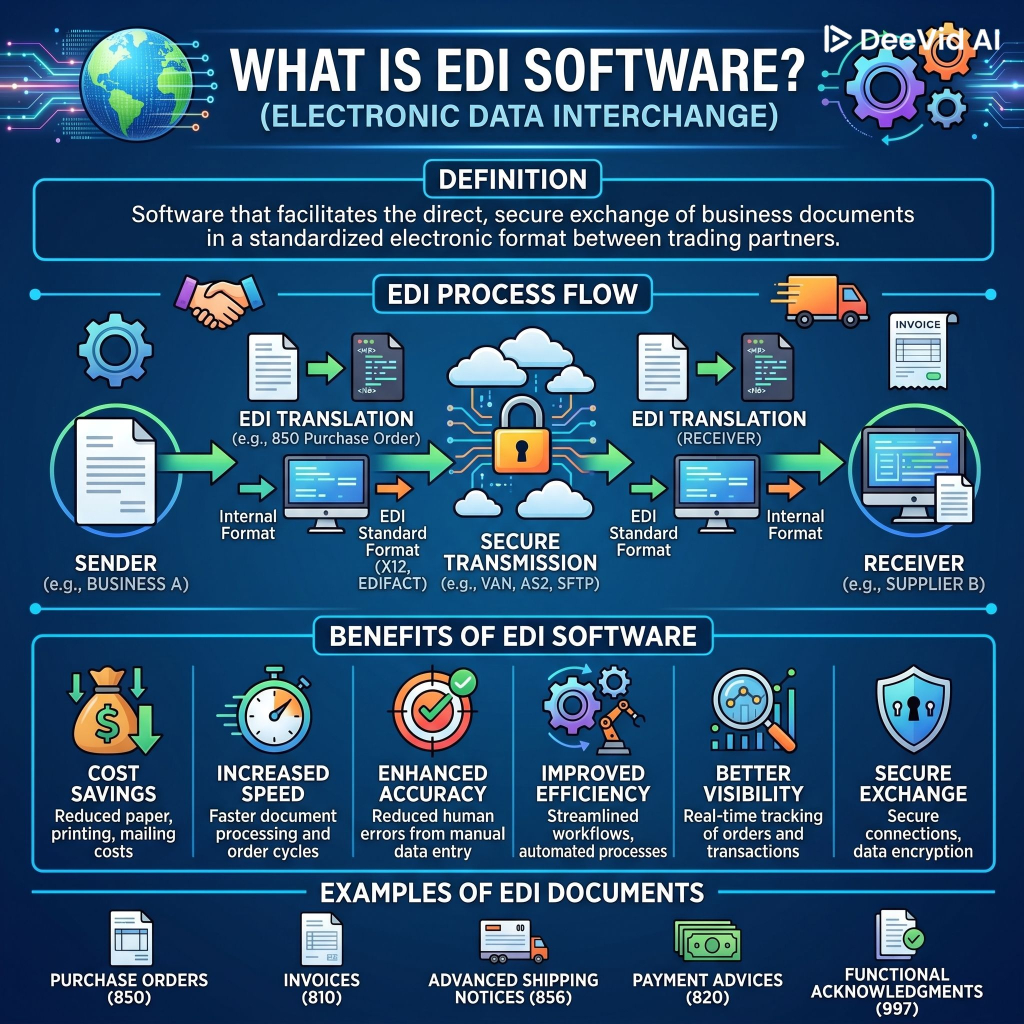













Navigating an Electronic Data Interchange (EDI) user guide might seem like decoding a foreign language at first glance, but for any American business looking to streamline its digital transactions, it is an indispensable tool. This guide will help you, the US business professional or IT specialist, break down complex EDI documentation into actionable steps, ensuring you can efficiently integrate and manage your digital data exchanges. Start by identifying your specific trading partner requirements and the document types you'll be handling.
An EDI user guide serves as your primary reference for setting up, managing, and troubleshooting your automated data flows with trading partners, both within the United States and internationally. It outlines everything from the fundamental structure of EDI messages to specific implementation guidelines for various business documents. Getting comfortable with your guide is the first step toward significant operational efficiencies.
| Key Aspect | Description for US Users |
|---|---|
| Purpose of EDI Guide | A roadmap for automated business document exchange. |
| Primary Audience | US businesses, IT professionals, supply chain managers. |
| Initial Action | Identify trading partner requirements and document types. |
| Core Benefit | Streamlined operations, reduced errors, improved compliance. |
| Typical Content | Message structures, data mapping, implementation rules, error codes. |
What is an EDI User Guide and Why Does it Matter to US Businesses?
An EDI user guide is a comprehensive document detailing the specifics of Electronic Data Interchange for a particular trading relationship or system. Essentially, it translates the technical language of EDI standards into practical instructions for businesses. For American companies, understanding these guides is vital for maintaining smooth supply chains and complying with vendor mandates.
These guides ensure that when your systems exchange data, like purchase orders or invoices, they speak the same digital language. Without a clear EDI user guide, data translation errors are rampant, causing delays and chargebacks. This is why investing time into understanding your specific edi user guide is not just good practice, but a business imperative.
For US-based retail, healthcare, or manufacturing sectors, precise data exchange directly impacts operational efficiency and financial health. A well-implemented EDI system, guided by its user documentation, minimizes manual data entry and accelerates transaction processing. This frees up staff for more strategic tasks.
Think of it like a universal translator for your business documents; it ensures every piece of information, from a product quantity to a shipping address, is correctly interpreted. This consistency prevents costly mistakes and strengthens relationships across your trading network.
| Insight | Impact on US Businesses |
|---|---|
| Standardized Data | Ensures all trading partners understand exchanged information. |
| Reduced Errors | Minimizes manual data entry mistakes, avoiding chargebacks. |
| Faster Transactions | Accelerates order-to-cash cycles and supply chain movements. |
| Improved Compliance | Helps meet specific trading partner and industry regulations. |
| Cost Savings | Decreases operational costs associated with paper processes. |
Navigating Your First EDI User Guide: A Step-by-Step Approach
Starting with an EDI user guide can feel overwhelming, but a structured approach makes it manageable. First, always locate the table of contents or index to find sections relevant to your immediate needs, such as specific transaction sets or error codes. Don't try to absorb everything at once; focus on what you need for your current project.
Next, identify the specific EDI standard being used (e.g., ANSI X12 for most US transactions) and the version. Your guide will detail how your trading partner implements this standard, which might include custom segments or data elements. Pay close attention to these variations, as they are crucial for successful data mapping.
Finally, look for examples of actual EDI messages and their corresponding business documents. Many guides provide visual representations or sample data that can be incredibly helpful for understanding the expected output. Hands-on testing with these examples is the best way to confirm your setup works correctly.
How Do I Find the Right EDI Standard for My Business?
To find the right EDI standard, you usually start by checking with your trading partners or industry associations in the US. Most American businesses leverage the ANSI X12 standard, particularly for transactions within North America. Your partners will dictate the exact standard, version, and specific implementation guidelines you need to follow.
Different industries often favor certain standards; for instance, healthcare uses HIPAA-mandated EDI X12 transaction sets. Consulting industry-specific resources or an EDI service provider can confirm the common standards for your sector. Always prioritize your trading partners' requirements to ensure interoperability.
What Are Common EDI Document Types in the US?
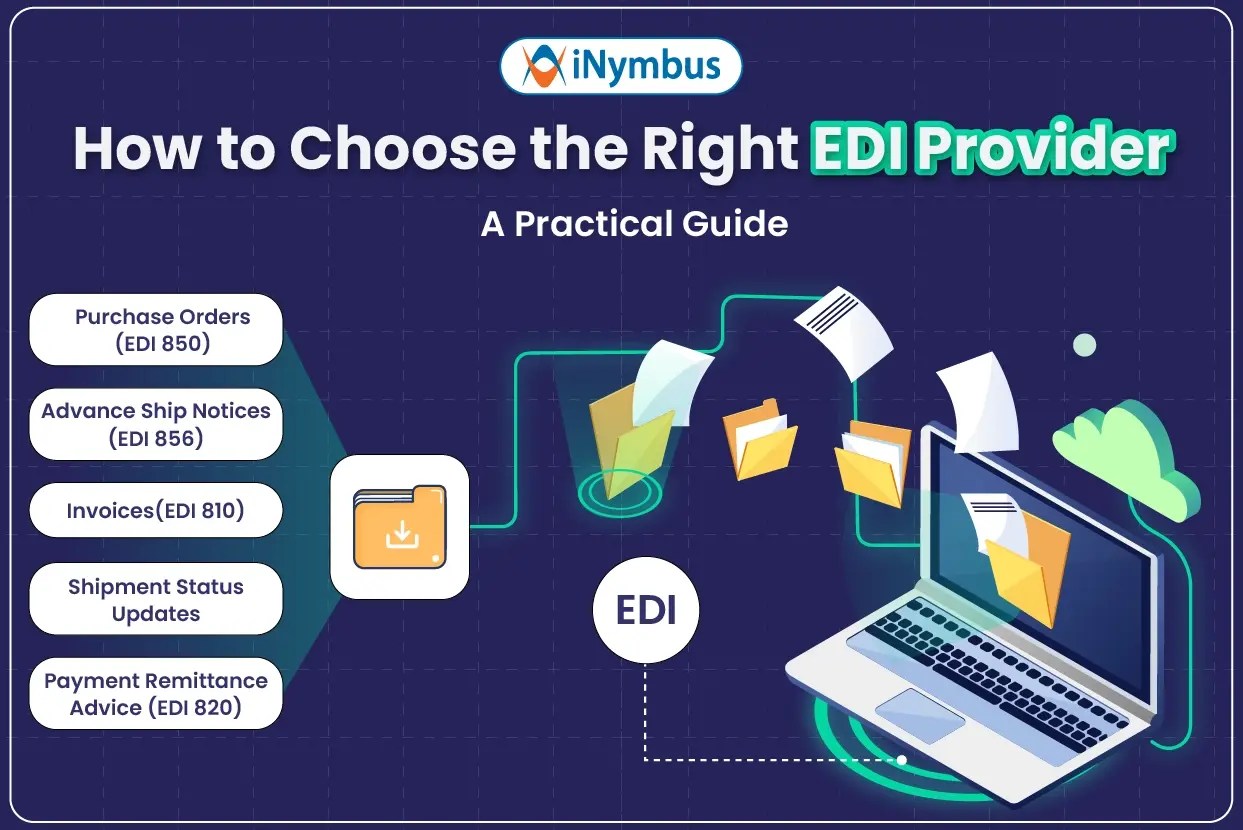
Common EDI document types in the US include the 850 Purchase Order, 810 Invoice, 856 Advance Ship Notice (ASN), and 997 Functional Acknowledgment. These are fundamental to managing procurement, billing, and logistics digitally across various industries.
Beyond these, you'll encounter documents like the 846 Inventory Inquiry/Advice for inventory management or the 834 Benefit Enrollment and Maintenance in healthcare. Each document type has a specific transaction set number and structure designed to convey particular business information efficiently. Familiarize yourself with those relevant to your operations.
| EDI Document Type | Common Use in US | Purpose |
|---|---|---|
| EDI 850 Purchase Order | Retail, Manufacturing | Customer sends order to supplier. |
| EDI 810 Invoice | All Industries | Supplier sends bill for goods/services. |
| EDI 856 Advance Ship Notice | Retail, Logistics | Supplier notifies customer of shipment. |
| EDI 997 Functional Acknowledgment | All Industries | Confirms receipt and syntax of EDI message. |
| EDI 834 Benefit Enrollment | Healthcare | Transfers enrollment information for benefits. |
Avoiding Common Pitfalls with EDI Implementations in the US
One frequent pitfall American businesses encounter with EDI is neglecting thorough testing before going live. Rushing the implementation can lead to significant data discrepancies, rejected documents, and strained trading partner relationships. Always conduct extensive end-to-end testing with your partners to catch errors early.
Another common mistake is failing to keep the EDI user guide and your internal mapping documentation up-to-date. As trading partners update their requirements or your business processes evolve, your EDI configurations must reflect these changes. Outdated documentation is a recipe for compliance issues.
Lastly, underestimating the need for ongoing support and maintenance can be costly. EDI systems are not "set it and forget it" solutions; they require continuous monitoring, periodic updates, and a responsive team to address issues. Many US companies find value in partnering with an EDI managed service provider for this reason.
Where Can Americans Find Official EDI User Guides and Support?
Finding the correct EDI user guide often depends on your specific trading partners or the EDI solution you're using. If you're exchanging data with a large retailer or manufacturer, they will typically provide their own proprietary EDI implementation guides through their partner portals or vendor websites. Always check these official sources first.
For general EDI standards like ANSI X12, organizations like X12.org offer comprehensive documentation and resources, though these are highly technical. Many EDI software providers also offer their own specific edi user guide for their platforms, which helps users configure the software to meet various trading partner requirements.
If you need hands-on assistance or troubleshooting, your EDI solution provider is your first point of contact. They often have dedicated support teams or offer consulting services to help you interpret guides, map documents, and resolve integration challenges. Don't hesitate to contact their support channels or explore their online knowledge bases for immediate help.
Frequently Asked Questions About EDI User Guides
What is the primary function of an EDI user guide?
The primary function of an EDI user guide is to provide detailed instructions and specifications for exchanging electronic business documents between trading partners. It ensures all parties understand the format, content, and transmission protocols required for seamless data integration, reducing manual efforts and errors across the supply chain.
Who typically needs to use an EDI user guide in the United States?
In the United States, businesses involved in supply chain management, logistics, healthcare, retail, and manufacturing often need to use an EDI user guide. This includes IT professionals, EDI specialists, business analysts, and anyone responsible for setting up or managing electronic data interchange with trading partners for compliance and efficiency.
Are EDI user guides standardized across all industries?
While underlying EDI standards like ANSI X12 are widely used in the US, EDI user guides are not universally standardized across all industries or trading partners. Each guide often includes specific implementation conventions, custom segments, or unique data requirements mandated by a particular company or industry sector, necessitating careful review.
How much does it cost to get an EDI user guide?
Generally, official EDI user guides provided by trading partners or industry bodies are accessible without direct cost once you establish a relationship. However, the overall cost of EDI involves software, integration services, training, and ongoing support, which can range from a few hundred to thousands of dollars depending on complexity and transaction volume.
What are the common mistakes to avoid when using an EDI user guide?
Common mistakes when using an EDI user guide include neglecting thorough testing, failing to keep implementation documentation updated, and not seeking expert help when encountering complex mapping challenges. Ignoring these can lead to transaction errors, compliance penalties, and significant operational inefficiencies for US businesses.