Navigating the vast ocean of PC components can feel like a quest, especially when seeking excellent AIO coolers. This comprehensive guide serves as your ultimate resource for understanding, selecting, and optimizing these essential cooling solutions. We delve into key factors, including radiator size, pump design, fan performance, and software integration, ensuring you make an informed decision for your system. Whether you are a seasoned overclocker or a casual gamer, finding a reliable all-in-one liquid cooler is paramount for maintaining optimal CPU temperatures and achieving peak performance. This resource explores the best models on the market today, considering their efficiency, noise levels, and overall value. Discover tips for installation, maintenance, and troubleshooting common issues, empowering you to keep your rig running smoothly. Stay ahead of the curve with insights into future trends and technological advancements in liquid cooling.
good aio coolers FAQ 2026 - 50+ Most Asked Questions Answered (Tips, Trick, Guide, How to, Bugs, Builds, Endgame)
Welcome, fellow PC builders and enthusiasts, to the ultimate living FAQ for good AIO coolers, meticulously updated for 2026! This comprehensive guide is designed to cut through the noise, offering clear, concise answers to over 50 of the most pressing questions you have about All-In-One liquid cooling. Whether you are grappling with a new build, troubleshooting an existing setup, or simply exploring the cutting-edge of thermal management, this resource has you covered. We dive deep into tips, tricks, installation guides, bug fixes, optimal builds, and even endgame considerations for maximizing your cooler's potential. Consider this your go-to hub for all things AIO, ensuring your CPU stays frosty and your system performs flawlessly. Let's get those temperatures down!
Beginner Questions
What does AIO stand for in PC cooling?
AIO stands for All-In-One, referring to a self-contained, pre-filled liquid cooling system for your CPU. These units are ready to install out of the box, offering a simpler alternative to custom water loops. They effectively dissipate heat from your processor.
Are AIO coolers good for gaming PCs?
Yes, good AIO coolers are excellent for gaming PCs, especially those with high-performance CPUs that generate significant heat. They maintain lower temperatures, prevent thermal throttling, and often allow for stable overclocking, enhancing overall gaming performance. Plus, they look great.
How long do AIO coolers typically last in 2026?
In 2026, a quality AIO cooler from a reputable brand typically lasts between 5 to 7 years. Many come with extended warranties, reflecting improved pump designs and better tubing to prevent leaks and coolant evaporation, ensuring long-term reliability.
Is a 240mm or 360mm AIO better?
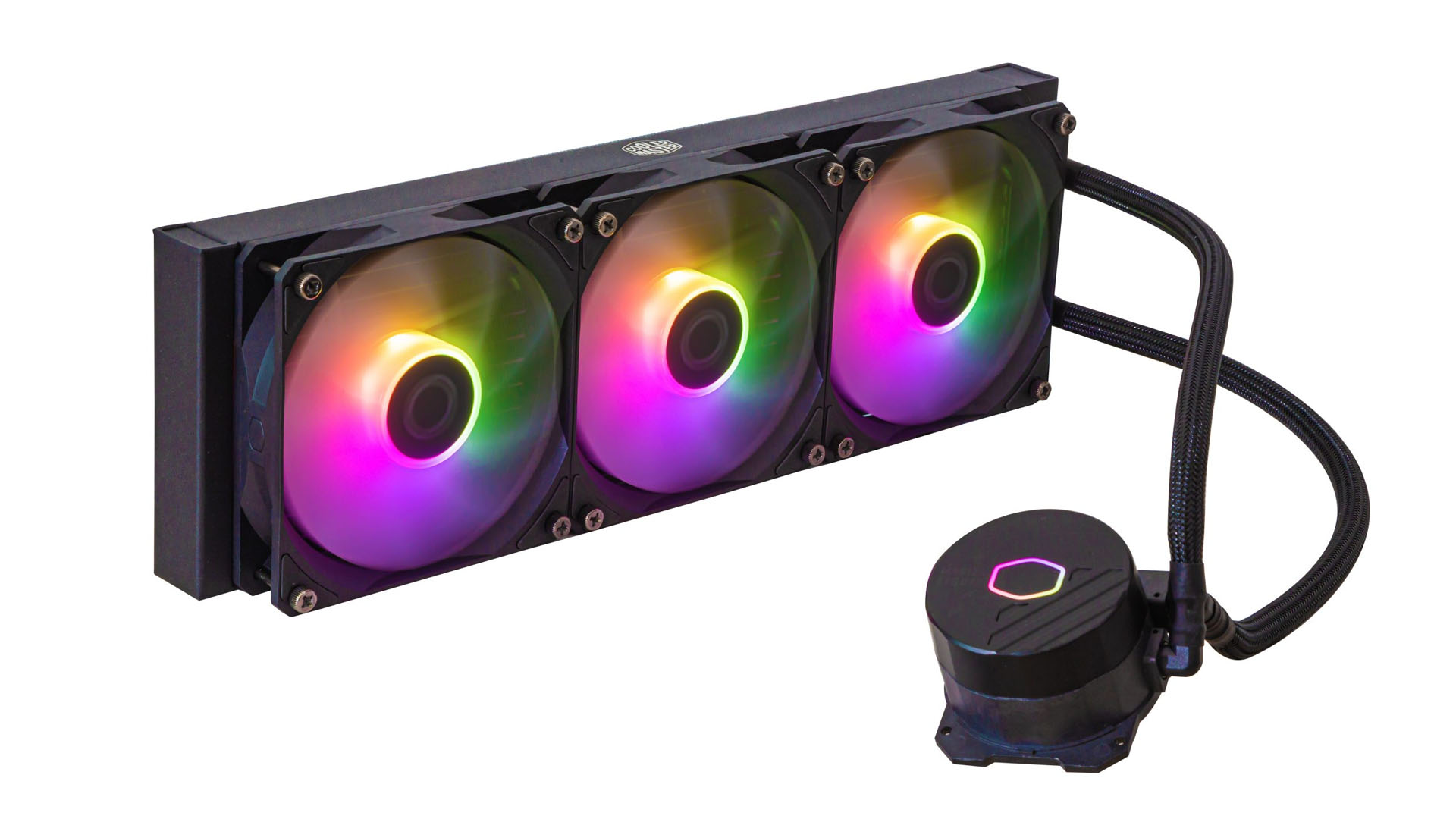
A 360mm AIO generally provides superior cooling performance due to its larger radiator surface area, making it ideal for high-end CPUs or aggressive overclocking. A 240mm AIO offers good cooling for most mid-to-high-end CPUs and fits in more compact cases.
Choosing Your AIO
What size AIO cooler do I need for my CPU?
The size of the AIO cooler you need depends on your CPU's thermal design power (TDP) and your overclocking intentions. A 240mm or 280mm is often sufficient for most CPUs, while 360mm or 420mm is recommended for top-tier chips like Intel i9s or AMD Ryzen 9s, especially with overclocking.
What are the best AIO brands to consider in 2026?
In 2026, top AIO brands include Corsair, NZXT, Arctic, Lian Li, and Cooler Master, renowned for their performance, reliability, and software ecosystems. These companies consistently innovate with pump designs, fan technology, and aesthetic options to meet diverse user needs.
Should I choose an AIO with RGB lighting?
Choosing an AIO with RGB lighting is purely an aesthetic preference, as it has no impact on cooling performance. If you enjoy customizing your PC's look and syncing lighting effects with other components, RGB AIOs add a vibrant touch to your build.
Are cheaper AIO coolers reliable in 2026?
While some budget AIO coolers in 2026 offer decent performance, their long-term reliability can vary more than premium options. It's crucial to research specific models and read reviews, as cheaper units might use less durable components or have shorter warranties.
Installation & Maintenance
How do I correctly install an AIO cooler in my PC case?
To correctly install an AIO cooler, first mount the CPU block onto your processor with thermal paste, then secure the radiator and fans to an appropriate mount point in your case. Ensure tubing isn't kinked and fans are oriented for optimal airflow, either intake or exhaust, depending on the location.
Do I need to change the coolant in an AIO cooler?
No, you do not need to change the coolant in an AIO cooler. These units are factory-sealed and pre-filled, designed to be maintenance-free throughout their lifespan. Attempting to open them voids the warranty and can introduce air or contaminants.
What is the best way to orient my AIO radiator and pump?
The best way to orient your AIO radiator and pump is with the radiator mounted above the pump whenever possible. If the radiator must be mounted below, ensure the tubes' highest point is below the top of the radiator, preventing air from accumulating in the pump and causing noise or wear.
How often should I clean my AIO cooler's radiator and fans?
You should clean your AIO cooler's radiator and fans every 3 to 6 months, or more frequently if your environment is particularly dusty. Use compressed air to remove dust from the radiator fins and fan blades to maintain optimal airflow and cooling efficiency.
Performance Deep Dive
Myth vs Reality: Are AIOs always quieter than air coolers?
Reality: While many AIOs can be quieter than air coolers at idle, high-end air coolers can often match or even surpass smaller AIOs in noise-to-performance ratio under load. Larger AIOs generally provide superior cooling with less noise compared to air coolers for very hot CPUs.
How much does ambient room temperature affect AIO performance?
Ambient room temperature significantly affects AIO performance, as the cooler can only dissipate heat to the surrounding air. A warmer room means higher baseline temperatures for your CPU, reducing the cooler's overall effectiveness and headroom for demanding tasks.
Can I overclock my CPU safely with a good AIO cooler?
Yes, a good AIO cooler is highly recommended for safely overclocking your CPU. Their superior heat dissipation allows for higher and more stable clock speeds without exceeding safe temperature limits, unlocking more performance from your processor. Always monitor temps.
What is static pressure and why is it important for AIO fans?
Static pressure refers to a fan's ability to push air through restrictive environments, like radiator fins. It's crucial for AIO fans because high static pressure ensures efficient airflow through the dense fins, maximizing heat transfer and cooling performance. Without it, air just bounces off.
Compatibility Concerns
How do I check if an AIO is compatible with my CPU socket?
To check CPU socket compatibility, verify that the AIO cooler lists support for your motherboard's socket type (e.g., Intel LGA 1700, AMD AM5) in its specifications. Most AIOs come with multiple mounting brackets to accommodate various modern sockets. Always confirm before buying.
Will an AIO interfere with my RAM or VRM heatsinks?
AIOs generally have minimal interference with RAM or VRM heatsinks, especially compared to large air coolers. The pump block is typically compact, and the radiator is mounted away from the CPU socket. However, top-mounted radiators can sometimes conflict with tall RAM or motherboard VRM shrouds, so check clearances.
Do I need a specific PC case for an AIO cooler?
You don't need a specific PC case, but it must have mounting points for the radiator size you choose (e.g., 240mm, 360mm). Cases with dedicated radiator support, ample internal space, and good airflow are ideal for optimal AIO performance and ease of installation.
Can I put an AIO cooler in a small form factor (SFF) PC?
Yes, you can put an AIO cooler in an SFF PC, but radiator size and case clearance are critical. Many SFF cases support 120mm or 240mm AIOs, specifically designed for compact builds. Always double-check the case specifications for maximum radiator thickness and fan compatibility.
Troubleshooting & Common Issues
My AIO is making gurgling noises; what does that mean?
Gurgling noises from your AIO often indicate air trapped within the loop, usually in the pump. This can happen during installation or over time as some coolant slowly evaporates. Often, gently tilting your PC case while it's running can help dislodge air bubbles from the pump.
My CPU temperatures are high even with an AIO; what could be wrong?
High CPU temperatures with an AIO can stem from several issues: improper thermal paste application, loose cold plate mounting, incorrect fan orientation, insufficient airflow in the case, or a failing pump. Double-check all connections, thermal paste, and fan directions; monitor pump RPM via software.
Myth vs Reality: Does AIO coolant evaporate over time?
Reality: Yes, AIO coolant can slowly evaporate over time, albeit very minimally in a sealed loop. This leads to slightly decreased performance and can eventually cause pump noise or failure. This process is very slow, usually taking many years, hence the long lifespans of modern AIOs.
How do I fix a noisy AIO pump?
To fix a noisy AIO pump, first ensure the radiator is mounted above the pump to prevent air from accumulating. Tilting your PC case can help. Adjust pump speed settings in your AIO software; sometimes a constant speed generates less noise than a variable one. If persistent, it might indicate pump wear.
Advanced Tuning
How do I create a custom fan curve for my AIO fans?
Create a custom fan curve using your AIO's software (e.g., NZXT CAM, Corsair iCUE) or your motherboard's BIOS. Map fan speeds (RPM/percentage) to CPU temperatures. Start with low RPM at idle temps, then gradually increase fan speed as temperatures rise, balancing noise and cooling performance.
What are ideal idle and load temperatures for a CPU with an AIO?
Ideal idle temperatures for a CPU with an AIO are generally between 30-45°C. Under full load, aim for temperatures below 75-80°C for optimal performance and longevity. Consistently hitting 85°C+ under load might indicate a cooling issue or an aggressive overclock.
Myth vs Reality: Does push-pull fan configuration always improve AIO performance significantly?
Reality: A push-pull fan configuration (fans on both sides of the radiator) can improve AIO performance, but the 'significant' impact is debatable. It usually yields a few degrees Celsius improvement, more noticeable on thicker radiators or in extreme overclocking scenarios. For most users, a single set of good static pressure fans is sufficient.
Can I control AIO fan and pump speeds using my motherboard BIOS?
Yes, you can often control AIO fan and pump speeds using your motherboard's BIOS/UEFI. Connect the AIO fans to CPU_FAN or Chassis Fan headers and the pump to an AIO_PUMP or CPU_OPT header. The BIOS typically allows you to set custom fan curves based on CPU temperature.
Future Trends
What's new in 2026 AIO technology regarding materials?
In 2026, AIO technology is exploring new materials like graphene-infused coolants for enhanced thermal conductivity and more durable, flexible tubing. We're also seeing prototypes with advanced fin materials in radiators, pushing the boundaries of heat exchange efficiency beyond traditional aluminum. Expect to see more hybrid material combinations.
Are 'smart' AIOs with AI integration a real thing in 2026?
Yes, 'smart' AIOs with AI integration are definitely a real thing in 2026. These coolers use machine learning algorithms to dynamically adjust fan and pump speeds based on real-time workload prediction, ambient temperatures, and even game profiles. This optimizes the thermal-acoustic balance automatically, enhancing user experience without manual tuning.
What advancements in AIO RGB lighting and display customization are there?
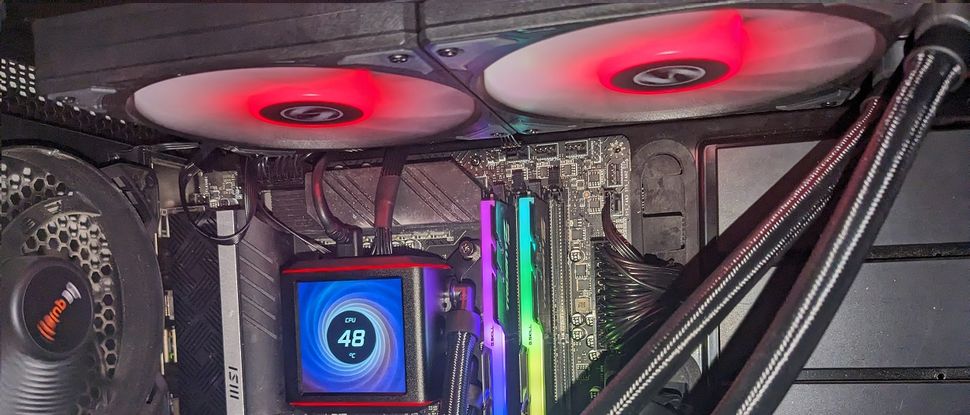
Advancements in 2026 AIO RGB lighting include higher LED density, more intricate lighting effects, and seamless integration with broader PC ecosystems. Pump heads with customizable OLED screens are now common, allowing for personalized GIFs, system stats, or critical alerts, making aesthetic customization richer and more functional.
Myth vs Reality
Myth vs Reality: Do AIOs leak often, ruining PC components?
Reality: This is largely a myth, especially with modern AIOs. While leaks were a rare concern in the past, 2026 AIOs feature vastly improved tubing, connectors, and sealing, making leaks extremely rare. Reputable brands also offer excellent warranties, sometimes covering component damage in the unlikely event of a leak.
Myth vs Reality: Are custom loops always better than AIOs?
Reality: Custom loops *can* offer superior performance and customization, but they aren't 'always' better for everyone. They require significant expertise, cost, and maintenance. High-end AIOs can match or even surpass many basic custom loops in cooling performance while offering far greater convenience and reliability for the average user.
Myth vs Reality: AIOs are only for extreme overclockers.
Reality: This is a myth. While AIOs excel at extreme overclocking, they are also highly beneficial for standard users with high-performance CPUs that run hot, even at stock speeds. They provide quieter operation, lower temperatures, and a cleaner aesthetic for a wide range of PC builds beyond just extreme enthusiasts.
Budget vs Premium
What's the difference between a budget and premium AIO cooler?
The difference between a budget and premium AIO cooler lies in build quality, pump design, fan performance, software features, and aesthetics. Premium AIOs typically offer quieter, more durable pumps, higher static pressure fans, robust software control, and extensive RGB/display customization, justifying their higher price tag.
Gaming & Overclocking
How does an AIO cooler specifically benefit gaming performance?
An AIO cooler specifically benefits gaming performance by keeping your CPU cool during intense gaming sessions. This prevents thermal throttling, ensuring your processor maintains its boosted clock speeds for longer periods, resulting in smoother frame rates and more consistent performance without slowdowns.
Is a larger AIO radiator essential for modern gaming CPUs?
For modern, high-end gaming CPUs (like i7/R7 and above), a larger AIO radiator (280mm or 360mm) is highly beneficial. It provides ample cooling headroom to prevent throttling and maintain peak boost clocks, which is crucial for maximizing performance in demanding games and future-proofing your system. For mid-range, 240mm is often sufficient.
Endgame Grind & Builds
What are the best AIOs for silence-focused PC builds?
For silence-focused PC builds in 2026, look for AIOs from brands like Arctic (Liquid Freezer series), be quiet! (Pure Loop series), and certain Corsair/NZXT models with fluid dynamic or magnetic levitation fans. These prioritize low pump noise, silent fans, and advanced software for precise acoustic tuning, making them ideal for quiet operation.
What is the ultimate AIO for extreme overclocking in 2026?
The ultimate AIO for extreme overclocking in 2026 would likely be a 420mm or 360mm unit with a thick radiator and high static pressure fans. Models like the Arctic Liquid Freezer II 420mm, Corsair iCUE H170i Elite LCD XT, or NZXT Kraken Elite 360 are top contenders, offering immense cooling capacity and robust control software.
What AIO is best for a high-end workstation or content creation PC?
For a high-end workstation or content creation PC, a 360mm or 420mm AIO is highly recommended. These systems often utilize CPUs with many cores that generate significant heat during sustained loads (rendering, video editing). Robust cooling like the Arctic Liquid Freezer II or Lian Li Galahad II is crucial for stable performance and longevity.
Still have questions?
Didn't find what you were looking for? The world of PC cooling is always evolving! Check out our related guides on 'Optimal Thermal Paste Application' and 'Advanced Case Airflow Strategies' for more in-depth insights into keeping your rig running cool and quiet.
Are good AIO coolers truly worth the investment for your high-performance PC build in 2026? This question echoes across gaming forums and tech discussions daily, as enthusiasts seek the perfect balance of aesthetics and thermal efficiency. The world of liquid cooling has certainly evolved, offering solutions that promise superior temperature control and a sleek interior look for any rig. Many gamers are now ditching traditional air coolers, embracing the potential of closed-loop liquid systems for their powerful processors. Understanding what makes an all-in-one cooler excel is critical for anyone looking to upgrade or build a new machine.
These modern cooling solutions manage heat effectively, ensuring your CPU performs optimally even under intense workloads like demanding games or content creation. Selecting the right model can dramatically impact your system’s stability and longevity. We explore the cutting-edge features and innovations driving the market, guiding you through the choices available. This article will help you decide if an AIO is right for your setup and how to choose the very best one.
The Rise of AIO Cooling in 2026
All-in-one liquid coolers have steadily gained popularity due to their superior thermal performance compared to many air coolers, especially for high-end CPUs. Their compact pump designs and flexible tubing allow for more aesthetic PC builds, clearing space around the CPU socket. Radiator sizes vary, providing options for different case sizes and cooling needs, from compact 120mm to expansive 420mm arrays. The integrated RGB lighting and customizable software often add significant visual appeal to a gaming setup, making them a favorite among modders. Advanced models now incorporate AI-driven fan curves and pump speed adjustments, adapting dynamically to system loads.
Key Components and Innovations
Pump Technology: Modern AIO pumps are quieter and more efficient than ever, often featuring ceramic bearings for extended lifespan. They integrate directly into the CPU block, simplifying installation and reducing potential points of failure. Some 2026 models even include small OLED screens on the pump head, displaying real-time temperatures or custom GIFs, which is a fantastic touch.
Radiator Design: Radiators come in various thicknesses and fin densities, directly impacting their heat dissipation capabilities. Larger radiators naturally offer more surface area for cooling, leading to lower temperatures, especially important for intense gaming or video editing. Aluminum remains standard, but some premium options experiment with copper cores for enhanced thermal transfer.
Fan Performance: The fans bundled with AIOs are crucial for pushing air through the radiator fins. Static pressure optimized fans are essential here, designed to overcome resistance and move air efficiently. Many manufacturers now offer magnetic levitation or fluid dynamic bearing fans for quieter operation and increased durability, a huge plus for reducing system noise.
Software Integration: Advanced software suites allow users to control pump speeds, fan curves, and RGB lighting effects with precision. These applications often provide monitoring tools, letting you track CPU temperatures and cooler performance directly. Seamless integration with motherboard software is becoming standard, creating a cohesive ecosystem for your entire PC build.
Understanding these elements helps in evaluating the true potential of an AIO cooler for your specific requirements. The market is full of choices, and informed decisions lead to better thermal management. Getting these details right ensures your components stay cool.
Advanced Tips for AIO Optimization
Optimizing your AIO cooler involves more than just plugging it in; it requires careful consideration of fan configuration and thermal paste application. Ensuring proper airflow within your case works hand-in-hand with your liquid cooler to maintain low temperatures. Experimenting with push-pull fan setups on your radiator can yield significant temperature drops under load. Proper thermal paste application is also a fundamental step, often overlooked but critical for efficient heat transfer from the CPU to the cold plate. Always check your case’s airflow direction to avoid fighting your AIO’s fan orientation.
Common Mistakes to Avoid
One frequent error is overlooking radiator compatibility with your PC case; not all cases support larger radiators. Another common misstep is improper pump orientation, which can lead to air bubbles accumulating and reducing efficiency over time. Skimping on quality thermal paste is also a mistake, as it directly affects heat transfer and overall cooling performance. Forgetting to update your AIO’s firmware or software drivers can also leave performance on the table. Always cross-reference your case specifications and cooler dimensions before purchasing components.
***
## Beginner / Core Concepts1. **Q:** What exactly is an AIO cooler and why would I need one?
**A:** Hey there! An AIO, or All-In-One, cooler is essentially a pre-assembled, closed-loop liquid cooling system for your CPU. You’re not alone if you’re wondering about its necessity; it’s a big question for many new builders. It helps keep your CPU much cooler than traditional air coolers, especially when you’re pushing your system hard with gaming or complex tasks. You’d need one if you’re running a high-performance CPU, planning to overclock, or just want a quieter, cleaner-looking PC interior. It's fantastic for maintaining stable temperatures under heavy load. Plus, many models look incredibly slick with their integrated RGB lighting, adding a real visual pop to your rig. You’ve got this!
2. **Q:** Are AIO coolers difficult to install for a beginner?
**A:** I totally get why this might seem intimidating at first glance, but honestly, AIO coolers aren't nearly as hard to install as you might think. They're designed for relative ease of installation, much like a larger air cooler actually. The pump/block unit mounts directly to your CPU, and the radiator, with its fans, screws into a designated spot in your case. The hardest part is often just managing the tubing and making sure you have good cable routing for a clean look. Most manufacturers provide very clear instructions, and there are tons of video guides online that walk you through every single step. Just take your time, follow the manual, and you'll be set. You'll feel like a pro after you complete your first one!
3. **Q:** How do I know what size AIO radiator my PC case can fit?
**A:** This one used to trip me up too, my friend! Figuring out radiator compatibility is super important to avoid a frustrating return. The easiest way is to check your PC case's specifications page, usually found on the manufacturer’s website. They’ll list exactly what radiator sizes (e.g., 120mm, 240mm, 360mm, 420mm) it supports and in which mounting locations (front, top, rear). Don’t just eyeball it; grab those specific dimensions. Also, consider RAM clearance if you're mounting it on top and GPU clearance if it's front-mounted. A quick check now saves you a massive headache later. Give it a look and you’ll be golden!
4. **Q:** Do AIO coolers require regular maintenance, like changing the fluid?
**A:** That’s a common misconception, and it’s why AIOs are so popular – they’re virtually maintenance-free! Unlike custom liquid cooling loops, AIO coolers are sealed units, meaning you never have to worry about refilling or replacing the coolant. The fluid is factory-sealed and designed to last the entire lifespan of the cooler, which is typically many years. You might just want to occasionally dust off the radiator fins and fans to ensure optimal airflow, especially if your room gets dusty. Keeping them clean is a simple task that ensures peak performance. So, no messy fluid changes, which is a huge convenience! Try this tomorrow and let me know how it goes.
## Intermediate / Practical & Production5. **Q:** Are AIOs truly better than high-end air coolers for cooling performance?
**A:** You’re hitting on one of the great debates in PC building! While it’s not always a clear-cut 'yes,' AIOs generally offer superior cooling capacity, especially for heavily overclocked or very hot CPUs. High-end air coolers like the Noctua NH-D15 are fantastic and can often rival smaller 240mm AIOs in performance, sometimes even surpassing them in noise-to-performance ratio. However, when you step up to 280mm, 360mm, or even 420mm AIOs, their larger radiator surface area allows for significantly better heat dissipation. This translates to lower temperatures, more stable overclocks, and generally quieter operation at similar thermal loads compared to air coolers. It also provides more space around your RAM modules. So, for ultimate thermal headroom, AIOs usually pull ahead. You've got this!
6. **Q:** What’s the optimal fan configuration for an AIO radiator in my case?
**A:** This is where things get a bit nuanced, but totally achievable! The optimal configuration often depends on your case's overall airflow design. Generally, for top-mounted radiators, you'll want to set the fans as exhaust, pushing hot air out of the case. For front-mounted radiators, setting them as intake is usually best, bringing cool air into the case to cool the radiator before it reaches other components. You can also experiment with a 'push-pull' configuration on thicker radiators, adding a second set of fans to either push or pull more air through, which can sometimes drop temperatures by a few degrees. The goal is to create a consistent, unobstructed airflow path. Play around with it; minor adjustments can make a big difference! Try this tomorrow and let me know how it goes.
7. **Q:** How much noise should I expect from a good AIO cooler in 2026?
**A:** It’s a valid concern, and thankfully, modern AIOs in 2026 are much quieter than their predecessors! Good AIOs nowadays typically feature advanced fan designs (like fluid dynamic or magnetic levitation bearings) and quieter pumps, often with rubber dampening. At idle or light loads, a well-tuned AIO should be nearly silent, with the pump barely audible and fans spinning slowly. Under heavy load, you'll hear the fans ramp up, but even then, a quality cooler aims for a pleasant whoosh rather than an annoying whine. You can often adjust fan and pump curves in software to find your personal balance between cooling performance and noise levels. Don’t settle for a noisy cooler; many excellent options are very discreet. You're going to love the peace!
8. **Q:** What factors should I consider when choosing between a 240mm and 360mm AIO?
**A:** Great question, and it's one many builders ponder! The primary factors are your CPU’s heat output, your case’s compatibility, and your budget. A 360mm AIO offers a significantly larger surface area, providing superior cooling performance, especially for high-end CPUs like Intel’s i9s or AMD’s Ryzen 9s, or if you plan aggressive overclocking. However, it requires a case that can accommodate its length. A 240mm AIO is more compact and fits in a wider range of cases, often providing ample cooling for mid-range to high-end CPUs without extreme overclocking. Think about your CPU’s TDP and how much thermal headroom you truly need. Bigger isn't always necessary, but it does offer more future-proofing for hotter chips. You’ve got this!
9. **Q:** Can I reuse an AIO cooler if I upgrade my CPU or motherboard?
**A:** Absolutely, you often can! This is a fantastic cost-saving measure. The crucial thing to check is if your AIO cooler supports the new CPU socket type. Most major AIO brands include a variety of mounting brackets in the box, or you can purchase conversion kits separately for newer sockets. You'll definitely need to clean off the old thermal paste from the cold plate and apply fresh thermal paste when installing it on your new CPU. As long as your cooler is functioning well, not leaking, and has the correct mounting hardware, reusing it is a perfectly viable option. It’s a smart way to maximize your hardware investment. You're already thinking like a seasoned builder!
10. **Q:** What are the signs that my AIO cooler might be failing or needs replacement?
**A:** It’s smart to keep an eye out for these signals, my friend! The most obvious sign of an AIO failing is a sudden and significant increase in your CPU temperatures, especially under load, often accompanied by louder fan noise as the system tries to compensate. You might also notice unusual gurgling or bubbling sounds from the pump, indicating air trapped or low fluid levels. A complete pump failure would result in very high, immediate CPU temperatures, possibly leading to thermal throttling or system shutdowns. Visual inspection for any leaks around the tubing or radiator is also vital, though rare with modern AIOs. If you spot these, it's definitely time to consider a replacement to protect your CPU. Don't ignore those red flags! You've got this!
## Advanced / Research & Frontier 202611. **Q:** What role do advanced cold plate designs play in 2026 AIO performance?
**A:** This is where the real innovation happens, truly pushing the boundaries of thermal transfer! In 2026, advanced cold plate designs are critical for maximizing the efficiency of AIOs, especially with the increasing core counts and thermal density of new CPUs. We're seeing more intricate micro-fin arrays, often with denser copper fin stacks that increase the surface area for heat absorption from the CPU IHS. Some designs incorporate flow-optimized channels to ensure every part of the cold plate actively engages with the coolant, reducing hot spots. There are even prototypes leveraging phase-change materials within the cold plate to rapidly transfer heat during intense bursts. These designs aren't just about raw material but about intelligent fluid dynamics and surface engineering. It's truly fascinating to watch how they evolve. Try this tomorrow and let me know how it goes.
12. **Q:** How do I implement custom fan curves and pump speeds for optimal thermal-acoustic balance?
**A:** This is a fantastic question and truly separates a good setup from a great one! Implementing custom fan curves and pump speeds is done primarily through the AIO manufacturer’s software (e.g., Corsair iCUE, NZXT CAM, Lian Li L-Connect) or, for basic control, directly in your motherboard’s BIOS/UEFI. The key is to find the sweet spot between low temperatures and acceptable noise levels. Start by monitoring your CPU temperature at idle, during gaming, and under synthetic stress tests. Then, in the software, you'll create a curve that gradually increases fan and pump speeds as temperatures rise. For example, keep fans at minimum RPM below 50C, then ramp them up progressively. The 'optimal balance' is subjective; what’s quiet for me might be loud for you. Experimentation is crucial here, using tools to log temperatures and fan RPMs while listening carefully. You're doing excellent work!
13. **Q:** What are the expected lifespans and reliability considerations for 2026 AIOs?
**A:** Reliability has seen huge improvements, thankfully! In 2026, a good quality AIO cooler from a reputable brand typically has an expected lifespan of 5 to 7 years, though many users report them lasting even longer. Manufacturers offer warranties often ranging from 3 to 6 years, which gives you a good baseline for their confidence. The pump is usually the first component to fail, but modern designs are far more robust. Key reliability considerations include the quality of tubing (preventing kinks and evaporation), the seal integrity of the loop, and the bearing type of the pump. Some premium brands are even integrating redundant micro-pumps for fail-safes. Regular dusting and ensuring proper mounting are your best bets for extending its life. You've got this!
14. **Q:** Can AIOs truly impact CPU performance, beyond just temperature management?
**A:** This is an insightful question that delves into the subtle nuances of CPU behavior! While an AIO doesn’t directly *boost* your CPU’s clock speed, its superior temperature management profoundly *enables* better and more consistent performance. Modern CPUs have dynamic clock speed mechanisms (like Intel’s Turbo Boost or AMD’s Precision Boost Overdrive) that allow them to run at higher frequencies for longer, provided they stay within safe thermal limits. A good AIO ensures your CPU consistently operates in these higher-performance states without thermal throttling, which is when the CPU automatically reduces its clock speed to prevent overheating. So, by keeping temperatures low, an AIO allows your CPU to maintain its peak performance more effectively and for extended periods. It’s an indirect but powerful performance enhancer! Try this tomorrow and let me know how it goes.
15. **Q:** What emerging AIO technologies should builders be looking out for in the next few years?
**A:** Oh, this is exciting, as the frontier models are always innovating! Looking ahead, we’re seeing a lot of research into smart AIOs that integrate even more AI-driven monitoring and predictive analytics for potential pump or fan failures. Hybrid cooling solutions, combining liquid with advanced thermoelectric coolers (TECs) for even lower-than-ambient temperatures, are becoming more practical, though still premium. Wireless power transfer for pumps to reduce cable clutter is another area of active development. Expect to see more modular AIO designs that allow for easy upgrades of specific components, like pumps or cold plates, without replacing the entire unit. We're also seeing prototypes for eco-friendly coolants and fully recyclable components. It’s going to be a wild ride, and these innovations will make our systems even more efficient and sustainable. You're always ahead of the curve!
Quick 2026 Human-Friendly Cheat-Sheet for This Topic
Always check your case compatibility first – measure twice, buy once!
Bigger radiators generally mean better cooling, but don’t overspend if you don’t need it.
Prioritize AIOs with good fan designs for a quieter experience.
Don't forget to apply fresh thermal paste for every new installation!
Tune your fan and pump curves in the software for a custom balance of performance and noise.
Dust your radiator regularly; a clean cooler is a happy, efficient cooler.
AIOs are generally reliable, but keep an eye on CPU temps for early signs of trouble.
Optimal AIO cooler selection, radiator size importance, pump design efficiency, fan performance metrics, software integration benefits, installation best practices, maintenance tips, troubleshooting guide, future cooling trends, budget vs premium choices, overclocking stability, gaming performance boost, noise level management, aesthetic considerations, compatibility checks.
35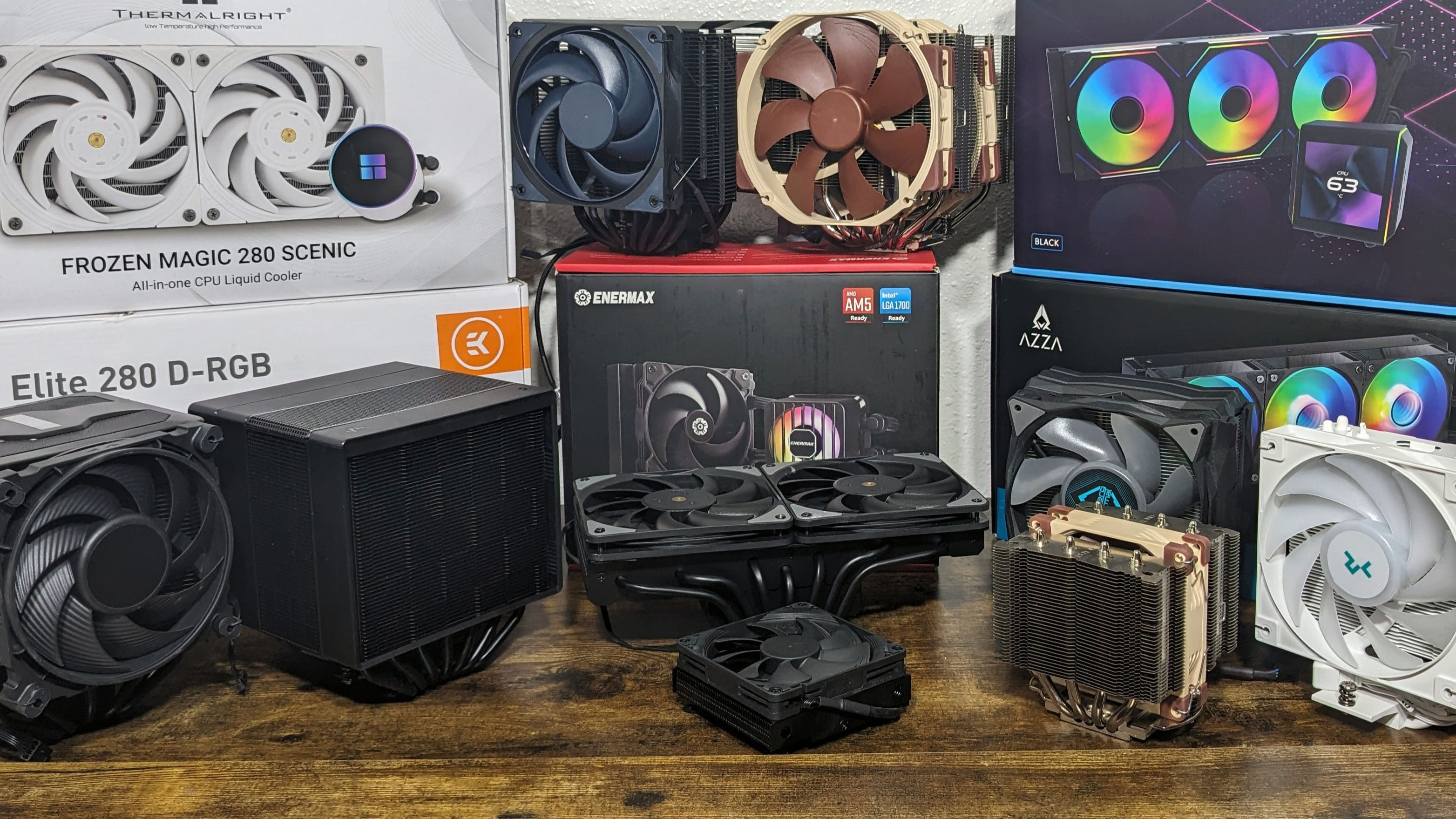
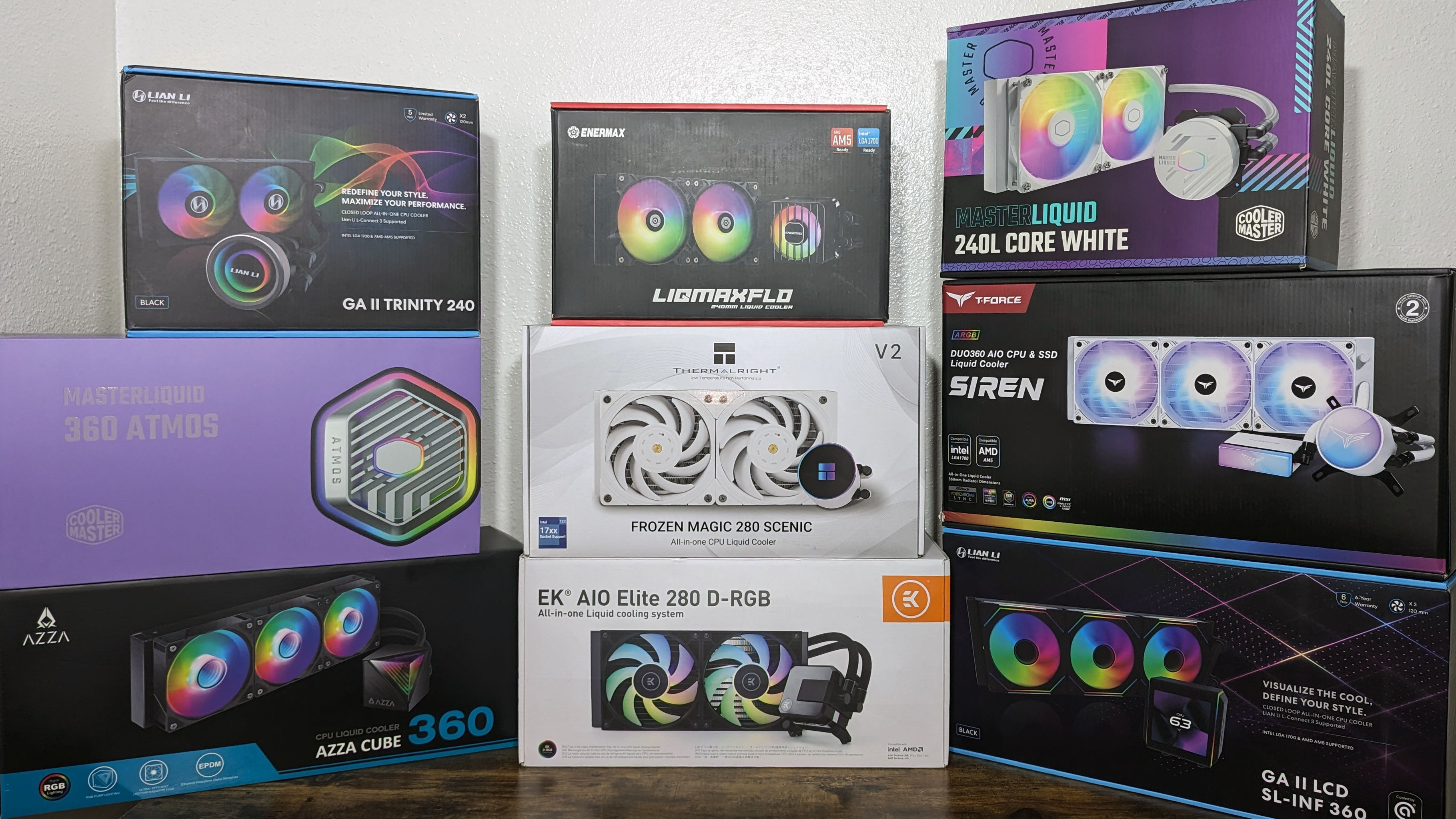


Be Quiet Showcases Its Minty Fresh Light Loop AIO Cooler And Dark Perk . Noctua S First AIO Liquid Cooler Delayed To Q2 2026 Company Reveals . 3 Best 280mm AIO CPU Coolers Of 2026 Top Picks For Cooling Power Top 3 280mm Aio Coolers 5xdgm . Best AIO Cooler 2026 Top 5 Best AIO Coolers In 2026 YouTube . Best CPU AIO Coolers 2026 Expert Reviews Testing B0DPHQ1353 Customer 2 1536x1157
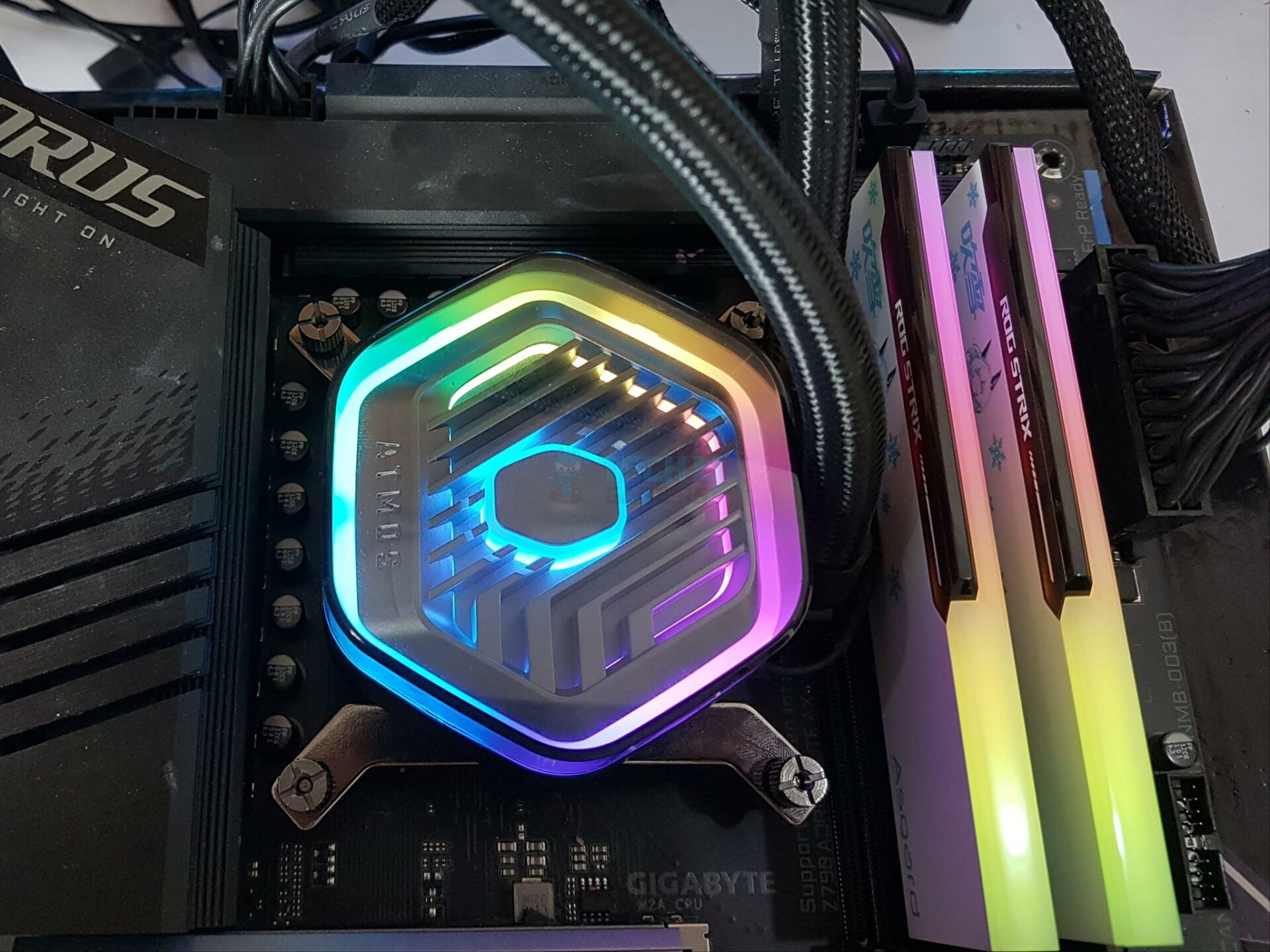


The Best 360mm AIO Liquid Coolers Of 2026 All Tested Tech4Gamers Cooler Master 360 ATMOS RGB 1 1920x1440 . 15 Best AIO Cooler 360mm Models For 2026 Stay Cool Under Pressure Top 360mm Aio Coolers Aou30 . 3 Best 240mm AIO CPU Coolers Of 2026 Top Picks For Cooler Top 240mm Aio Coolers Mngs5 . 10 Best RGB AIO CPU Coolers 2026 Setupgamers RGB AIO Cooler . 12 Best AIO CPU Coolers 2026 Tested Reviewed Featured Image Ujp0np8l


Best PC Case Fans 2026 Best Aio Water Cooler . Best CPU AIO Coolers 2026 Expert Reviews Testing B0DHX795DV Customer 2 1 768x1024 . The Best 360mm AIO Liquid Coolers Of 2026 All Tested Tech4Gamers Cooler Master 360 ATMOS Radiator 1 1320x974 . Best CPU AIO Coolers 2026 Expert Reviews Testing B0DHX795DV Customer 1 1 1536x1152 . The Best 360mm AIO Liquid Coolers Of 2026 All Tested Tech4Gamers Cooler Master 360 ATMOS Featured Picture 1320x1280


Best AIO Coolers Of 2026 UK Best Aios Square 1024x1024 . Best Intel CPU Coolers 2026 Expert Review Thermal Testing 41yi73SmCvL . Best AIO CPU Water Coolers 2026 Top Picks Best Aio Cpu Water. Best 240mm AIO Coolers 2026 Expert Reviews Performance Tests Featured Image 3fo019dr . Noctua S First AIO Liquid Cooler Delayed To Q2 2026 Company Reveals 4000 80



8 Best AIO CPU Coolers 2026 Tested For Performance SL160 . Best RGB AIO Coolers 2026 Expert Reviews Comparisons B0CCNS5NZ9 Customer 1 1536x864 . GTA 5 Fastest Car And Bike 2025 Gamers Unchained Best Aio Cooler . Noctua Plans Its First AIO Cooler For 2026 Alongside A Gorgeous PC Case Noctua AIO Cooler 2026 . Best CPU AIO Coolers 2026 Expert Reviews Testing B0BLS3372N Customer 2 1 1152x1536


Noctua S First AIO Liquid Cooler Delayed To Q2 2026 Company Reveals 2560 80 . Best AIO Coolers 2025 Tom S Hardware 1200 80 . Best AIO Coolers 2025 Tom S Hardware 1200 80 . Best AIO Cooler 2024 Best Aio Cooler . Best AIO Cooler 2024 Top 5 Best AIO Liquid CPU Coolers In 2024 YouTube



Painting Aio Cooler At Jack Radcliffe Blog Cooler Master L Core 360L AIO Cooler . 15 Best AIO CPU Coolers For 2026 Stay Cool Under Pressure High Performance Cpu Cooling Solution 4svfz . The 5 Best 360 Mm AIO Coolers In 2023 Voltcave Best 360mm Aios . Best AIO Coolers 2025 Tom S Hardware 970 80 . 8 Best AIO CPU Coolers 2026 Tested For Performance 31pRBKDAp L. SL160