


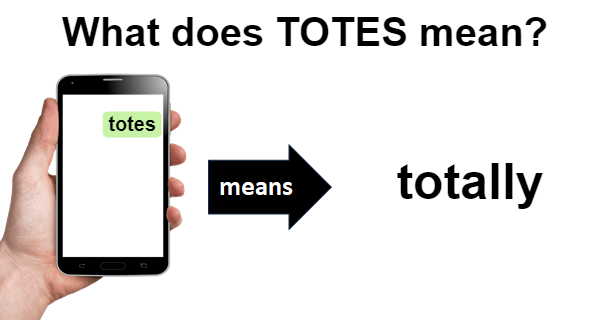







Ever find yourself scratching your head when a friend drops a "totes" into conversation? You're not alone. This snappy, informal word has woven itself firmly into the fabric of American casual speech, leaving many to wonder about its precise meaning and proper use. At its heart, "totes" is a clipped, often playful, version of "totally." It's an adverb used to emphasize something, express complete agreement, or affirm a statement with a touch of laid-back enthusiasm.
Think of it as a verbal nod that says, "Yes, absolutely!" or "That's completely true!" It injects a sense of earnestness or full endorsement without sounding overly formal. While its origins are rooted in informal speech, understanding what does totes mean today is key to navigating everyday conversations in the U.S. Its charm lies in its conciseness and ability to convey a strong sentiment quickly and casually.
This article will unpack everything you need to know about "totes," from its linguistic roots to its various applications in modern American dialogue. We'll explore how this small word carries significant weight in context, helping you sound more natural and engaged in your interactions. Get ready to add this versatile piece of slang to your linguistic toolkit!
What Does Totes Mean in Modern American English?
In contemporary American English, the phrase what does totes mean primarily functions as an informal abbreviation of the word "totally." It serves multiple purposes, most commonly to express emphatic agreement or to intensify an adjective or verb. It's a hallmark of casual conversation, particularly among younger generations, but its usage has broadened significantly across various age groups in informal settings.
When someone says "totes," they are typically conveying a strong affirmation, similar to saying "absolutely," "definitely," or "completely." The word carries a lighthearted, informal tone, making it suitable for friendly exchanges rather than formal discussions. It's a quick way to show you're on the same page or that you feel a sentiment very strongly.
The versatility of "totes" allows it to fit into many conversational contexts, from agreeing on plans to expressing enjoyment or frustration. Its prevalence reflects a broader trend in American slang towards shortening words and adopting playful, expressive language that streamlines communication while maintaining a personal touch.
The Origins and Evolution of "Totes"
The journey of "totes" from "totally" illustrates a common linguistic phenomenon: word clipping. This process involves shortening a word or phrase without changing its meaning, often for ease of pronunciation or to create a more informal style. While the exact moment "totes" gained widespread traction is hard to pinpoint, its rise aligns with the early 2000s surge in internet and texting culture, where brevity became a premium.
Initially, "totes" might have been perceived as youth slang, popularized in teen dramas and online forums. However, like many slang terms that offer efficiency and a certain vibe, it gradually moved into broader usage. Today, it's not uncommon to hear adults incorporate "totes" into their casual speech, demonstrating its successful integration into mainstream American colloquialisms.
This evolution highlights how language is a living entity, constantly adapting to social shifts and technological advancements. The adoption of "totes" is a prime example of how informal communication can influence and enrich standard language, even if it retains its casual designation.
How "Totes" Differs from "Totally"
While "totes" is a direct abbreviation of "totally," there are subtle differences in their usage and connotation. "Totally" is a more standard adverb, widely accepted in both informal and semi-formal contexts, albeit still leaning casual. It can be used without carrying the same level of trendiness or playfulness that "totes" often implies.
"Totes," on the other hand, is almost exclusively informal. It carries a distinctly relaxed, sometimes even whimsical, tone. Using "totes" can signal a certain familiarity or a desire to connect on a more casual, contemporary level. It implies a shared understanding of modern slang and often adds a layer of lightheartedness to the conversation. Choosing between "totes" and "totally" often comes down to the desired level of informality and the specific social context.
Understanding these subtle differences helps one navigate the nuances of American English and communicate more effectively. It's not just about the meaning, but the *feeling* the word conveys.
How to Use Totes Effectively in American Conversations
Mastering the use of "totes" is less about grammar rules and more about understanding social context and conversational flow. As an informal intensifier and agreement-marker, what does totes mean in practice boils down to where and when you deploy it. It shines in casual settings where a relaxed, friendly tone is appropriate, adding a touch of contemporary flair to your dialogue.
Think of it as a verbal shortcut that adds emphasis without sounding overly dramatic or formal. It's particularly useful when you want to quickly affirm something or express strong agreement with a statement. However, its informality means it's best kept out of professional or academic environments.
The key is to use it naturally, as if it's simply part of your everyday vocabulary, which for many Americans, it already is. Overuse can make it sound forced, but a well-placed "totes" can definitely make your conversations feel more authentic and current.
Examples of "Totes" in Everyday Sentences
To really grasp how "totes" works, let's look at some common scenarios:
- Expressing strong agreement: If a friend says, "This weather is perfect for the beach," you might respond, "Totes!" meaning "Yes, absolutely!"
- Intensifying an adjective: "I'm totes exhausted after that workout" conveys a much stronger sense of tiredness than just "I'm tired."
- Affirming a shared sentiment: When someone remarks, "That movie was incredible," you could chime in with, "Totes amazing!"
- In response to a suggestion: "Should we grab some coffee?" "Totes!" (meaning "Definitely!")
These examples highlight how "totes" simplifies and energizes responses, making conversations flow more smoothly among peers. It’s a versatile word that easily adapts to various conversational needs.
When Not to Use "Totes"
While "totes" is incredibly handy in casual settings, there are definitely times when it's best to avoid it. Knowing these situations is just as important as knowing when to use it, ensuring you maintain appropriate decorum and respect in different social and professional environments.
- Formal or professional settings: During a job interview, a business meeting, or in an official email, "totes" would sound unprofessional and undermine your credibility.
- Academic writing: Essays, research papers, or formal presentations are not the place for slang. Stick to standard English.
- Serious or somber conversations: If discussing a sensitive or grave topic, using "totes" can come across as insensitive or flippant, regardless of your intention.
- When speaking to someone unfamiliar with slang: If you're talking to someone who might not understand contemporary American slang, using "totes" could lead to confusion or make you seem less clear.
Choosing the right words for the right moment is a crucial aspect of effective communication. "Totes" has its place, but that place is firmly within the realm of casual, informal interaction.
Comparing "Totes" with Other Informal Intensifiers
Understanding what does totes mean also involves seeing how it stacks up against similar informal intensifiers in American English. While many words can add emphasis, "totes" carries a unique blend of casualness, modernity, and sometimes a slightly whimsical or even ironic tone that distinguishes it. It's part of a larger family of slang that prioritizes brevity and expressive flair.
Consider other common intensifiers like "super," "really," or "so." Each serves a similar function but with varying degrees of formality and different underlying connotations. "Totes" often implies a level of shared, contemporary understanding, almost like an inside nod among those familiar with current slang. This table offers a quick comparison:
| Intensifier | Formality Level | Common Usage & Connotation | Example |
|---|---|---|---|
| Totes | Very Informal | Strong agreement, playful emphasis, trendy, modern | "That movie was totes amazing!" |
| Totally | Informal to Semi-Formal | Strong agreement, emphasis, more broadly accepted | "I totally agree with you." |
| Super | Informal | General intensification, widely used, slightly less trendy | "I'm super excited for the trip." |
| Really | Neutral to Informal | General intensification, very common, less emphasis on trendy vibe | "It's really cold outside." |
| So | Informal | Strong intensification, often paired with adjectives, very common | "I'm so tired today." |
This comparison helps illustrate that while the core function is similar, the social implications and